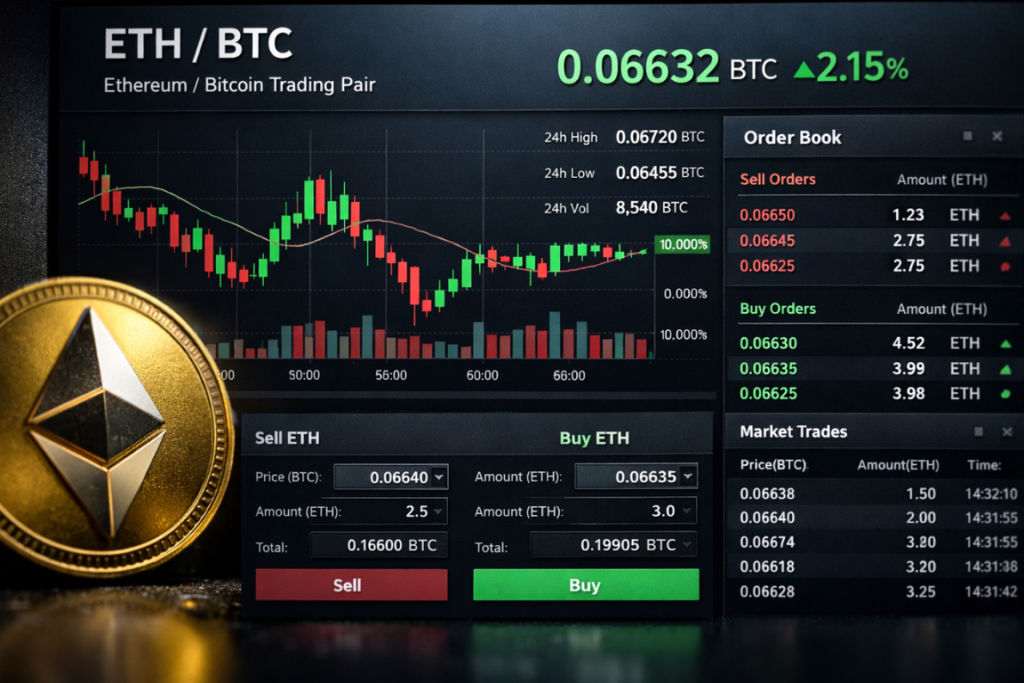
Market pairs define how digital assets interact with each other inside a cryptocurrency exchange. Every buy or sell order is placed through a market pair, making it the core mechanism that drives price discovery and liquidity across crypto markets.
How Market Pairs Represent Value
A market pair is written as two assets separated by a slash:
Example:
ETH / USDT reflects the value of Ethereum measured in USDT at that moment.
This structure allows traders to compare assets directly and react quickly to market movements.
📊 Why Market Pairs Matter
Market pairs do more than enable trades—they provide insight into market behavior.
Key roles include:
Showing relative asset performance
Enabling smooth conversion between currencies
Supporting liquidity across markets
Allowing accurate price comparison
⚙️ Market Pair Execution Explained
When traders place orders within a market pair, they interact with a live order book. Prices change continuously based on buying and selling pressure, and once orders align, trades are completed instantly.
This process ensures:
Advantages of Trading via Market Pairs
Real-time valuation: Prices adjust instantly
Wide asset access: Trade across multiple markets
Efficiency: Faster execution in high-volume pairs
Control: No leverage or forced liquidation
Trade Smarter with Market Pairs
Understanding market pairs empowers traders to navigate crypto exchanges with clarity. By tracking real-time price relationships and market trends, users can make informed decisions and trade with confidence.
Related Posts